Outdoor packing checklist
Tick items as you pack. Your ticks are saved in this browser so the list is ready for next time.
Tuning when the weather keeps changing
Steel and nylon strings respond to temperature and humidity. Moving a guitar from a warm car into cool shade, or leaving it in bright sun, can pull it noticeably out of tune within minutes. Let the instrument sit in its closed case for around ten minutes to adjust before tuning. Tune once fully, then check again after your first song. Most players retune lightly between every two or three songs outdoors; build that into your set as a natural pause rather than an interruption.
Never leave a guitar in a hot car or face-up in strong sunlight. Heat can soften glue and damage finish, and that harm is often permanent.
Shape the set like an afternoon
For an informal gathering, thirty to forty-five minutes is plenty. Think of it in three gentle movements:
Welcome (2–3 songs)
Familiar songs at modest volume. People are still settling, so let them chat over you.
Share (3–5 songs)
Your own songs and the harmonies you've rehearsed. A short spoken introduction helps listeners lean in.
Sing together (2–3 songs)
Choruses everyone knows, then one quiet closer that hands the afternoon back to conversation.
Playing considerately in shared spaces
Parks, beaches and gardens are shared. Before you play, look around: is someone reading, sleeping or having a private conversation nearby? Choose a spot with some distance, face your music towards your own group, and keep your volume at a level your group can hear without it carrying across the space. If someone asks you to play more quietly, do so cheerfully.
Many local authorities and park managers have rules on amplified sound, busking and gatherings. In the UK, for example, councils often set their own busking policies and park byelaws. Check the rules for any public space before you bring an amplifier or play to passers-by. Informal acoustic playing among friends is usually welcome, but it is your responsibility to confirm.
Position for sound, not for show
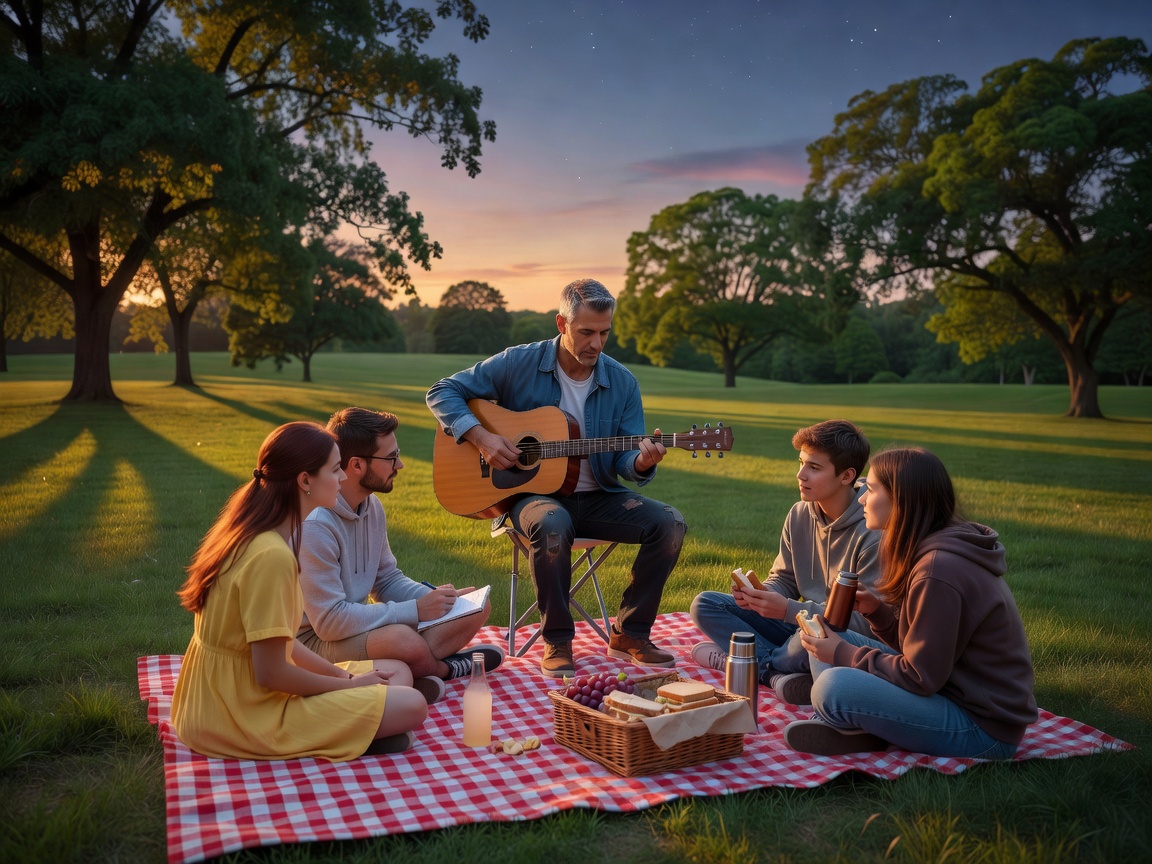
Sit facing your listeners with any wind behind you, so it carries your sound towards them rather than away. Trees, a wall or even a parked camper behind you will reflect a little sound forward. Sitting on a low stool rather than on the ground lets the guitar's soundhole face the group instead of the grass.
Tutor's tip: your last rehearsal should happen outside, not in your bedroom. Five minutes in a garden teaches you more about outdoor volume than an hour indoors.